
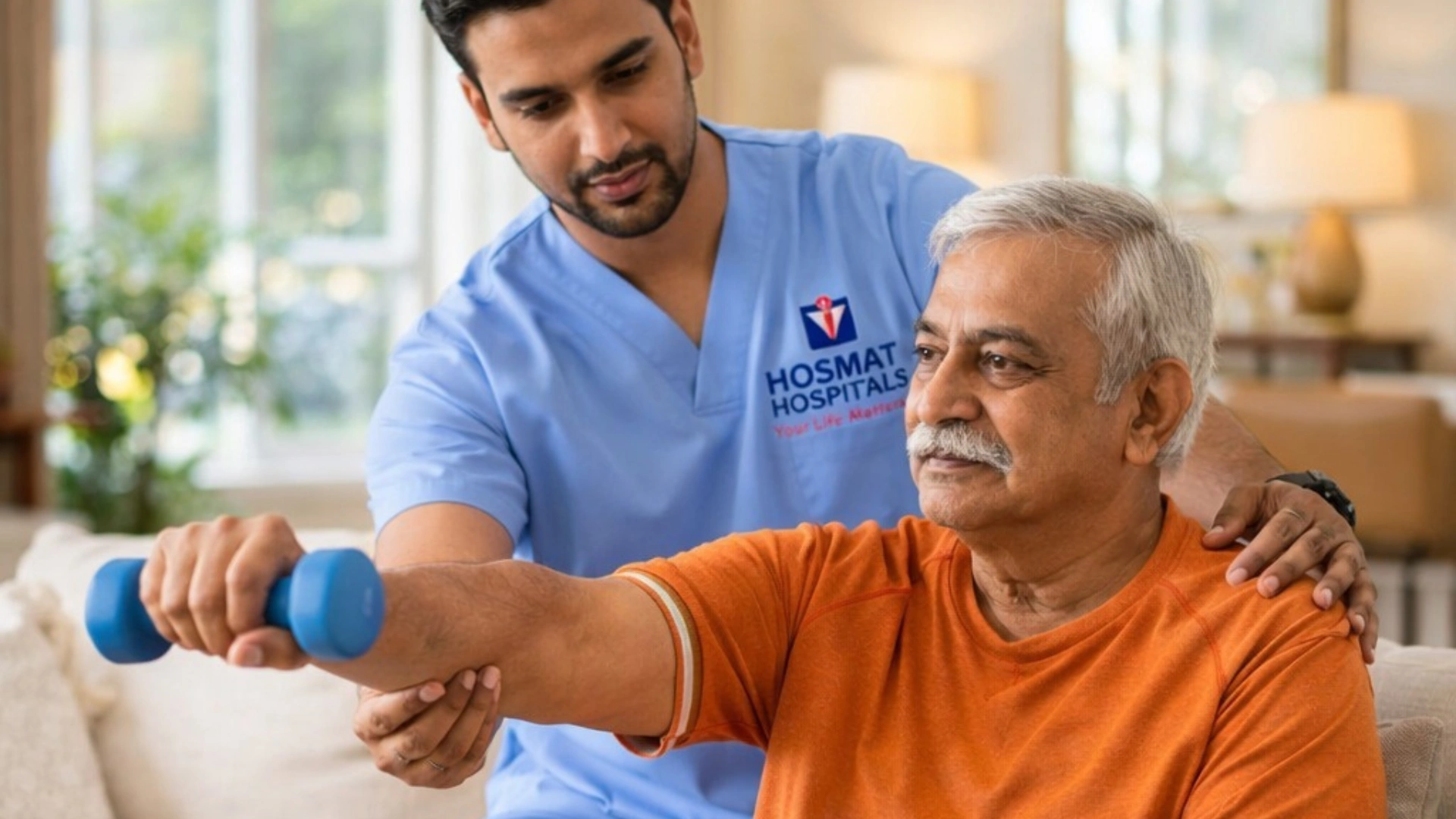
The hospital stay is only the start of recovery. Real healing often happens in the days and weeks after discharge – when patients do their exercises, learn to move safely, manage medicines, and restore confidence to live independently. That’s why good homecare matters: it brings clinical skill, continuity and compassion into the place people feel safest — their home.
Below is a practical, research-backed look at why homecare is rapidly becoming indispensable in modern healthcare, and how HOSMAT Hospitals has built a hospital-grade homecare program that actually improves outcomes for patients recovering from surgery, stroke, chronic pain and more.
Why homecare is not merely convenient – it’s evidence-based care
Home-based healthcare is more than bedside visits. Studies and reviews show clear benefits from structured homecare programs: better adherence to treatment plans, improved patient satisfaction, and measurable improvements in health-related outcomes when care is delivered in the home setting. Homecare models that combine nursing, diagnostics, telefollow-up and rehabilitation can reduce readmissions and keep recovery on track.
Specifically for physiotherapy, randomised and quasi-experimental studies have found that home-based physiotherapy programs significantly improve functional outcomes for patients after stroke and other disabling conditions – showing that the environment where therapy happens matters for real-world recovery.
What this means in practice: starting recovery early at home, with a structured plan and regular review, helps patients regain mobility faster and reduces the risks of complications that lead to repeat hospital visits.
The practical benefits families and patients feel every day
- Recovery in a familiar, low-stress setting. Patients often mobilise more confidently at home and are more likely to practise daily exercises when they don’t need a commute.
- Continuity with the treating team. When homecare is integrated with the hospital, the physiotherapist, nurse or doctor follows the exact rehabilitation goals and escalation pathways the surgeon or specialist sets.
- Fewer readmissions and quicker problem detection. Trained home nurses and therapists catch early signs of infection, swelling, or poor mobility and escalate promptly.
- Personalised, goal-oriented rehab. Home programmes adapt exercises to the patient’s living space and daily activities, so therapy is meaningful (able to climb stairs, sit at a desk, bathe independently).
- Caregiver education and support. Families learn safe transfer techniques, medication schedules, and how to progress exercises — reducing anxiety and improving outcomes. Evidence reviews report gains in patient satisfaction and quality of life with well-structured homecare.
Homecare works best when it’s clinically integrated, not fragmented
The difference between ad-hoc “visits” and effective homecare is integration. The best homecare systems:
- follow hospital protocols and discharge plans;
- provide trained clinicians (physiotherapists, nurses, technicians) who use outcome milestones;
- include escalation and re-admission pathways back into the hospital if complications appear; and
- offer clear documentation and telefollow-up so progress is tracked.
In India, several whitepapers and position studies emphasise this integrated model as the blueprint for scalable, high-quality homecare.
HOSMAT Homecare: bringing hospital-grade rehab to your door
HOSMAT Hospitals has built its Homecare Services on the same clinical principles that have guided its hospital practice for decades. HOSMAT combines acute-care experience with structured rehabilitation pathways, and has extended that expertise into homecare offerings that patients and families can rely on.
What HOSMAT Homecare brings to patients:
- Hospital-aligned physiotherapy: HOSMAT’s physiotherapy and rehabilitation teams design home programmes that mirror in-hospital protocols for joint replacement, spine surgery, stroke and trauma recovery, so treatment continues seamlessly after discharge.
- Clinical breadth of services at home: Beyond physiotherapy, HOSMAT Homecare offers nursing care, diagnostics (blood tests, portable X-ray), medication administration (including IV fluids when required), and teleconsultations – reducing unnecessary hospital visits.
- Goal-driven plans with caregiver training: Each patient receives a tailored plan (milestones, exercises, safety checks) and caregiver coaching so families are confident in managing day-to-day care.
- Rapid escalation pathways: If a patient shows unexpected symptoms, HOSMAT’s home team can connect quickly with hospital specialists and arrange timely evaluation or readmission when needed.
- Experience and trust: HOSMAT’s legacy in orthopaedics, trauma and neuro-rehabilitation supports complex homecare needs, from post-arthroplasty rehab to neuro-rehab after stroke. This institutional experience matters when clinical judgment and coordination are required.
Who benefits most from HOSMAT’s homecare services?
- Patients after joint replacement or spine surgery who need graded mobilisation and gait training.
- Stroke survivors and those needing neuro-rehabilitation (balance, coordination, ADL training).
- Older adults with mobility limitations who need fall-prevention, strength maintenance, and safe-movement training.
- People with chronic pain or degenerative joint disease who need posture correction, ergonomic advice and consistent, progressive rehab.
- Families seeking clinical supervision (wound checks, IV meds, diagnostics) without repeated travel.
A short guide: when to consider homecare
- You’re leaving the hospital but still need daily physiotherapy or clinical monitoring.
- A caregiver is available but needs hands-on training and medical supervision.
- Travel to clinics is difficult (mobility limitations, distance, dependence).
- You want to reduce the risk of readmission after a major procedure.
Homecare is not an afterthought, it’s a phase of care
Modern recovery requires a continuum: hospital → structured homecare → outpatient follow-up. When homecare is clinically integrated, outcome-driven and led by trained clinicians, it reduces complications, improves function and restores daily life faster.
HOSMAT’s Homecare Services take hospital-grade physiotherapy, nursing and diagnostics to the home, backed by decades of orthopaedic and rehabilitation experience. For patients and families, that means recovery that’s safer, more convenient and more likely to stick.